.png)
Agribulk
Gateway for Agribulk Trade
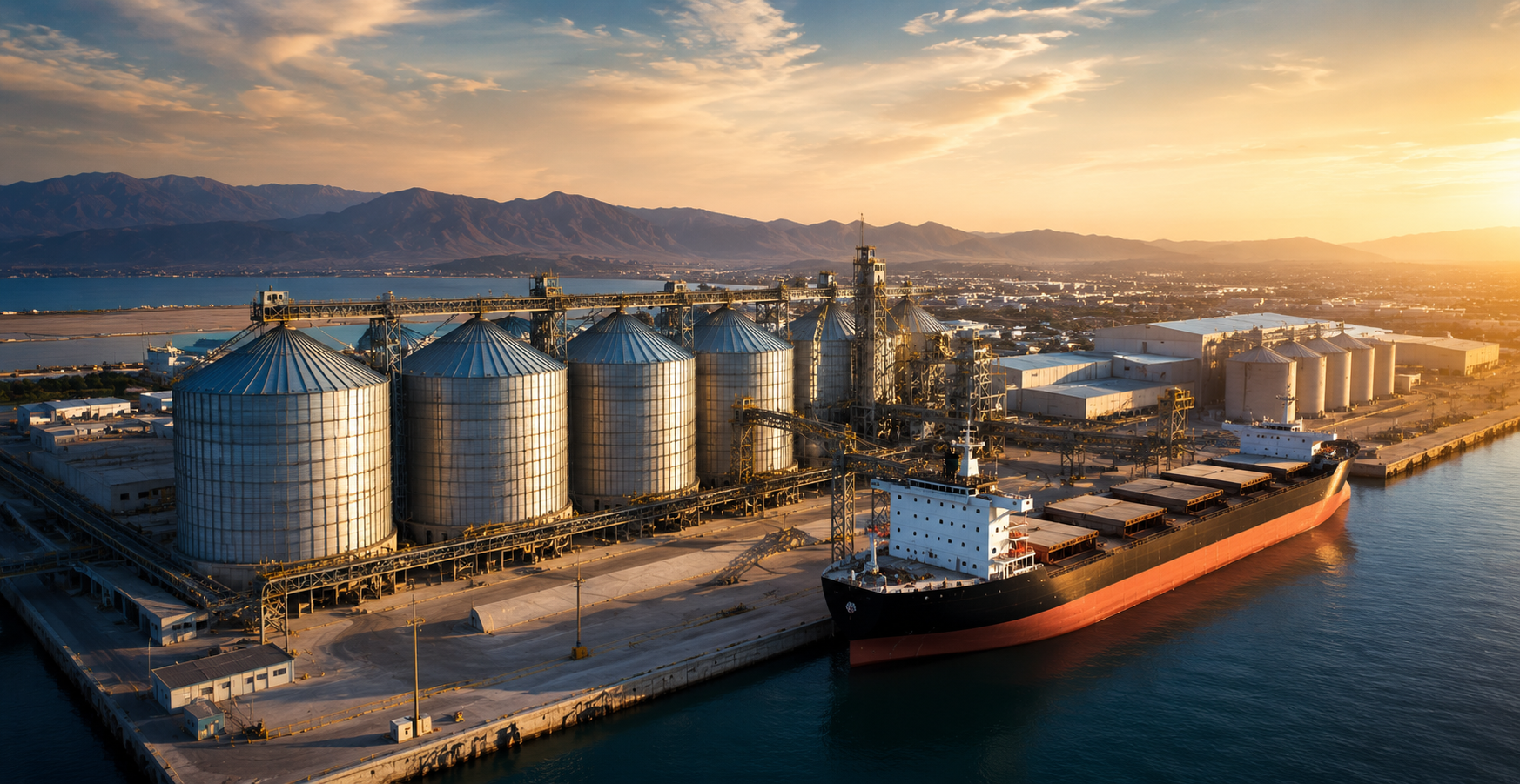
The Agribulk Terminal at RAK Energy Hub is designed to become a strategic gateway for the import, export, storage and distribution of agricultural commodities across the GCC, Middle East, Indian Ocean and East African trade corridors. Positioned within Saqr Port, one of the region’s most established industrial ports, the development combines direct maritime access, scalable infrastructure and long-term industrial positioning to support growing regional demand for food security and bulk commodity flows. Agricultural trade volumes across the region continue to expand as population growth, industrial food production and livestock sectors increase demand for imported grains, feedstock and agricultural inputs. At the same time, regional storage and handling capacity remains constrained, creating opportunities for efficient, large-scale terminal infrastructure that can improve supply chain resilience and reduce dependency on fragmented logistics networks. The terminal is designed as a flexible and future-ready agribulk platform capable of handling a broad range of commodity classes, including grains, cereals, feedstock, fertilizers and dry agricultural products. Through integrated storage, handling and distribution infrastructure, operators benefit from improved throughput performance, operational reliability and optimized cargo flows.
Strategic Location Advantage
Located in Ras Al Khaimah within the UAE, the Agribulk Terminal benefits from direct connectivity into regional and international shipping lanes. The location offers efficient access to major consumption markets while avoiding congestion and operational limitations seen in competing regional ports. Its positioning enables: Direct access to GCC demand centresConnectivity to Indian Ocean and East African trade routesReduced vessel waiting times and operational delays. Efficient landside distribution into regional industrial zonesLong-term scalability through available industrial land. This location strategy supports both import-oriented supply chains and export-driven commodity flows.
Terminal Infrastructure & Operational Capabilities
The terminal concept is developed around operational flexibility and scalable growth. Illustrative infrastructure components include Dedicated bulk unloading and loading facilities. Covered and open storage solutions. High-capacity silos and warehouse infrastructureConveyor and automated material handling systems. Port-to-storage integration. Truck and inland logistics connectivity. Environmental and dust-control systems. Future expansion capabilityInfrastructure is designed to support efficient vessel turnaround times and optimize end-to-end cargo handling performance.
Commercial Model
The Agribulk Terminal is structured as a long-term infrastructure platform designed to support stable and recurring revenue generation. Revenue streams may include:
- Storage agreements,
- Throughput and handling fees,
- Long-term capacity reservations,
- Terminal service contracts
- Value-added logistics services
- Commodity processing and blending capabilities.
Commodity price exposure remains with terminal users while the platform operates as a service-driven infrastructure asset.
Strategic Investment Case
Regional agricultural supply chains continue to require larger, more resilient and professionally operated logistics infrastructure. The Agribulk Terminal offers exposure to a structural market opportunity driven by increasing trade volumes, supply chain localization and long-term food security initiatives across the Middle East and surrounding regions. Supported by industrial port infrastructure and phased expansion potential, the development provides a scalable platform capable of evolving alongside regional demand while maintaining operational flexibility and strong infrastructure fundamentals
Supporting Regional Food Security
The Agribulk Terminal must be designed to support national and regional food security strategies by providing resilient import, storage and distribution infrastructure for essential food commodities. Long-term storage capacity, diversified supply routes and scalable logistics infrastructure help strengthen strategic food reserves while supporting commercial trade flows across the GCC.
Agribulk can be part of the SAQR 2.0 Industrial Ecosystem
Unlike stand-alone terminal developments, this facility forms part of the wider SAQR 2.0 Industrial Port & Energy Ecosystem. Shared marine infrastructure, utilities, pipeline corridors, logistics services and industrial land create operational synergies, reduce development costs and provide significant opportunities for future expansion alongside complementary industries.
.png)